


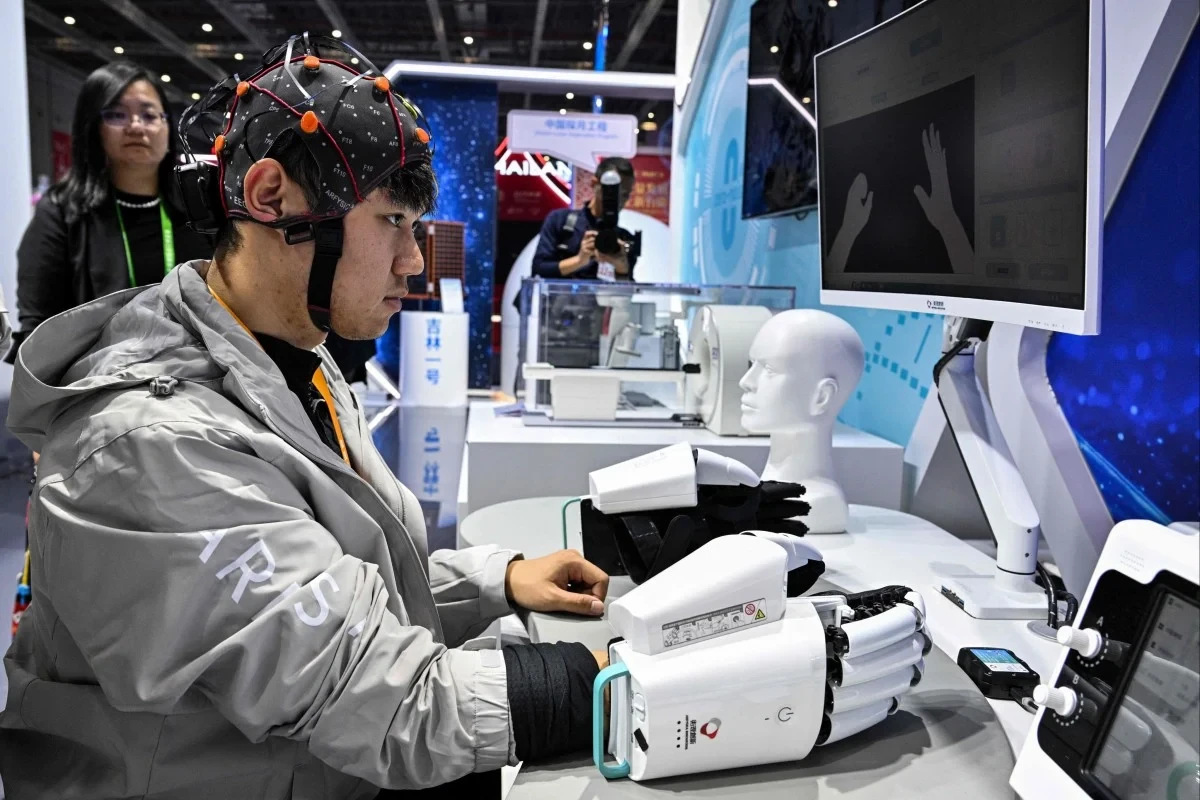
China has taken a major step in the global race for brain–computer interfaces (BCIs), granting the first-ever commercial approval for an implantable system developed by Neuracle Medical Technology. The device is designed to help patients with spinal cord injuries regain hand movement—marking a shift from experimental trials to real-world clinical use.
Unlike earlier research-stage implants, Neuracle’s system is a coin-sized, wireless device placed on the brain’s surface that reads neural signals and translates them into physical actions via external hardware, such as a robotic glove. Early clinical results show meaningful improvements in patients’ ability to grasp objects and perform daily tasks.
This approval is globally significant: it represents the first time an invasive BCI has been cleared for commercial deployment, putting China ahead of competitors like Neuralink, whose devices remain in clinical trials.
Beyond the medical implications, the move highlights China’s strategic push into neurotechnology. Brain–computer interfaces are now classified as a “future industry,” attracting investment, regulatory support, and rapid startup growth.
While the technology holds promise for restoring lost functions and potentially transforming human–machine interaction, it also raises familiar concerns: surgical risks, long-term reliability, and ethical questions around human augmentation.
Still, this milestone suggests that BCIs are no longer a distant concept—they are entering the commercial and clinical mainstream.
Can you afford not to be in China? Talk to us, we’ll help you succeed in China.