


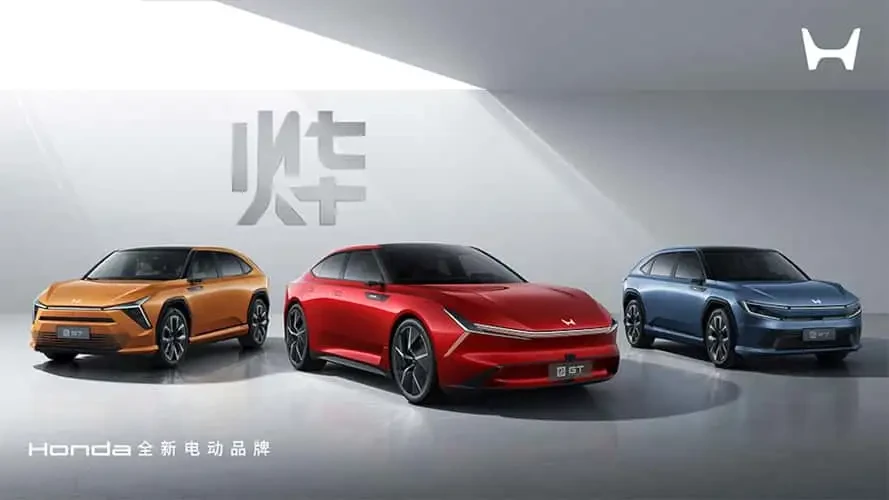
Honda is doing something unusual: it is giving power back to its engineers.
After years of centralized, management-driven decision-making, the company is spinning out its R&D unit again—effectively returning to a model where engineers, not executives, drive innovation. This is not nostalgia. It is a reaction.
And the reason is clear: China.
The China Shock
For decades, Japanese automakers dominated through engineering excellence, incremental innovation, and global scale. That model is now under pressure from Chinese competitors who operate at a fundamentally different speed.
Chinese carmakers can develop new models in less than half the time of traditional players.
They iterate faster, integrate software earlier, and are willing to abandon legacy platforms quickly. The result: shorter product cycles, aggressive pricing, and increasingly competitive EV offerings.
For Honda, the impact is visible. Sales in China have dropped sharply from their 2020 peak, while factory utilization has fallen to roughly 50–60%.
This is not a cyclical downturn. It is structural.
Why Honda Is Rewiring Itself
Honda’s decision to re-separate its R&D arm is a return to the philosophy of its founder, Soichiro Honda: innovation thrives when engineers are independent.
The company had folded R&D back into headquarters in 2020 for efficiency. That worked in a stable environment. But the world has changed.
“Five or six years ago, it was fine… now the world has changed drastically.”
Today, speed and creativity matter more than coordination.
This restructuring is also an admission: traditional corporate hierarchies are too slow to compete with China’s execution model.
China’s Advantage: Not Just Cost
It’s tempting to frame China’s rise as a cost story. That’s outdated.
The real advantage lies in:
- Development speed (sub-2-year cycles)
- Vertical integration (batteries, software, supply chain)
- State-backed scale and capital
- Domestic competition intensity
Chinese EV makers are effectively running a high-frequency innovation loop—something legacy OEMs were never designed for.
The Strategic Implication
Honda’s move is bigger than one company.
It signals a broader shift:
- Japanese and Western firms are abandoning managerial control models
- Engineering autonomy is becoming a competitive necessity again
- Organizational structure is now a strategic weapon
In other words, the competition is no longer just about products—it’s about how companies are built internally.
The Bigger Question
Even Honda admits there is no guarantee this will be enough.
Because the challenge is not just innovation—it is system-level speed.
China’s automotive ecosystem operates like a coordinated network. Western and Japanese firms still operate like hierarchies.
Bottom Line
China is not just competing in the automotive industry—it is forcing a redesign of how global companies innovate.
Honda’s restructuring is one of the clearest signals yet:
- The old model is breaking
- Engineering-led cultures are returning
- And China is setting the pace
The question is no longer whether incumbents can catch up.
It’s whether they can reinvent themselves fast enough.
Can you afford not to be in China? Talk to us, we’ll help you succeed in China.