


Creative Commons Attribution 3.0
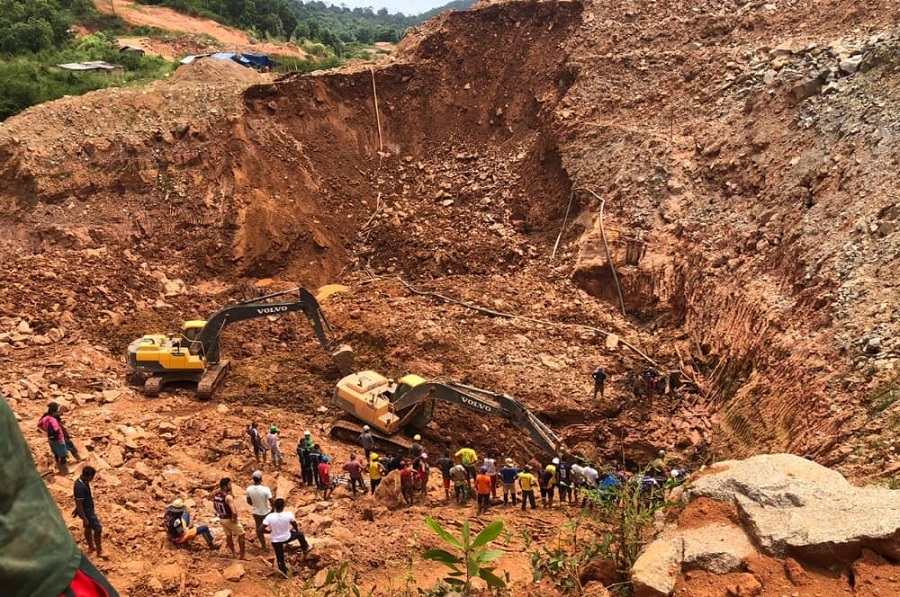
A $2.8 billion deal in central Brazil doesn’t look dramatic at first glance. One mining project changes hands, investors line up, production ramps up. It could be just another resource story. It isn’t. At the center is the Serra Verde project in Goiás, currently the only operating rare earth mine in Brazil. Rare earths are not actually rare, but they are difficult to process. And that is where the real bottleneck lies. China understood this early. Today it controls the bulk of global refining capacity. Mining is only the first step. The real value comes later, when raw material is turned into usable inputs for magnets, electronics, electric vehicles, and military systems.
That is exactly what the United States is trying to rebuild. The structure of the deal makes that clear. This is not just a private acquisition. It comes with long-term offtake agreements, guaranteed buyers, and strong backing from U.S. industrial policy. The goal is not simply to extract minerals, but to secure supply. And crucially, much of the processing is not planned for Brazil.
That leaves Brazil in an uncomfortable position. The country has some of the world’s largest rare earth reserves, yet only one active mine. It has the resources, but not the full industrial chain. This deal reinforces that pattern rather than changing it. For the U.S., this is a step toward reducing dependence on China. Not by competing on cost, but by building parallel systems. Reliable, politically aligned, even if they are more expensive. For China, the challenge is different. It already dominates refining and has spent decades building the ecosystem around it. That kind of industrial depth is hard to replicate quickly. Which brings us to the broader picture. Rare earths are not just another commodity. They sit at the base of modern technology. Whoever controls their processing controls a critical layer of the global economy.
The West is now trying to rebuild that layer. Piece by piece, project by project. Brazil, meanwhile, risks ending up where it has often been before. A supplier of raw materials in a system whose real value is created elsewhere. The difference this time is that everyone knows what is at stake.
Can you afford not to be in Brazil? Talk to us, we’ll help you succeed in Brazil.