


He Huifengin Guangdong
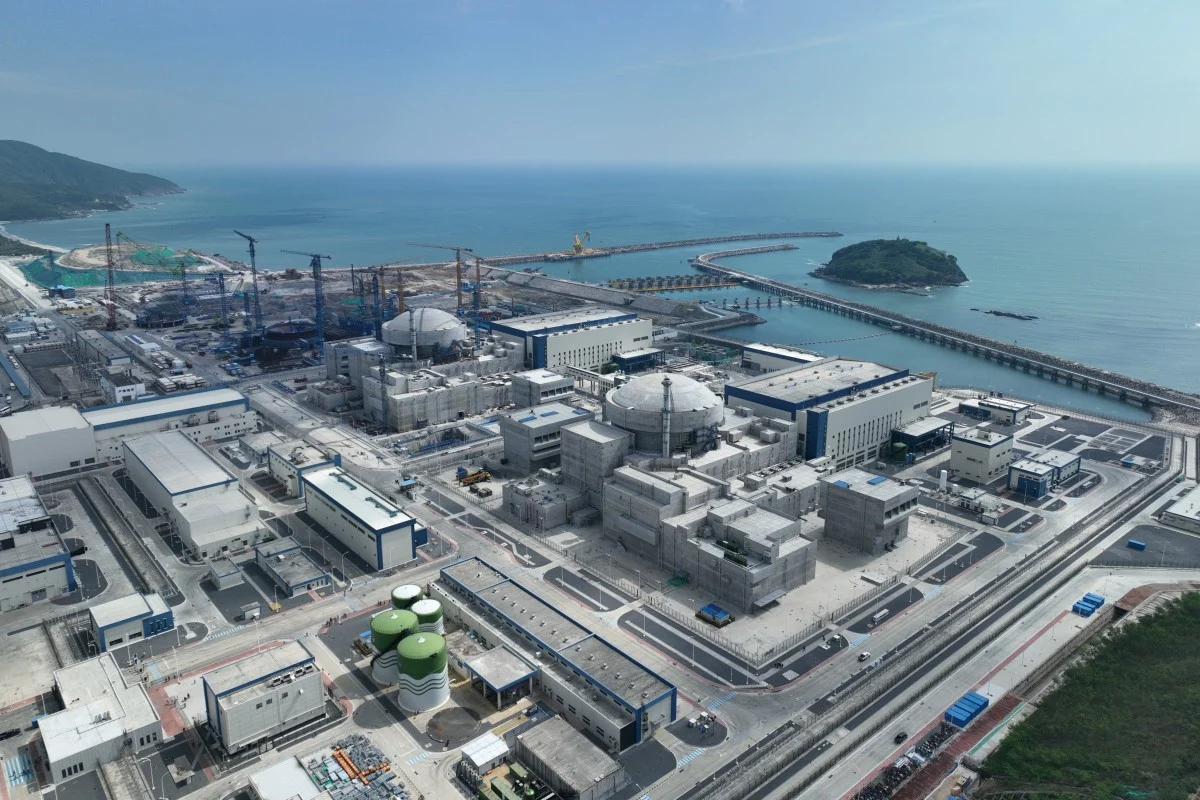
China’s nuclear industry has reached a scale that no other country can currently match. According to a new report by the China Nuclear Energy Association, the country is now capable of building up to 50 nuclear reactors simultaneously.
This doesn’t mean 50 reactors are being built right now. It means China has the industrial capacity, workforce, supply chains, and project management systems to run that many large-scale projects in parallel, from design to construction.
That is a very different kind of statement. It’s not about ambition. It’s about capability.
China has been steadily expanding its nuclear sector for years. The government approves new reactors regularly, often around ten per year, and construction timelines are significantly shorter than in most Western countries.
At the same time, dozens of reactors are already under construction, giving China the largest nuclear buildout in the world.
The long-term plan is even more ambitious. China aims to build around 150 reactors between 2020 and 2035, which would fundamentally reshape global nuclear energy markets.
What makes this particularly important is not just energy supply. It is industrial strategy.
Nuclear power in China is tied to several goals at once: reducing dependence on coal, improving energy security, and building exportable high-tech infrastructure. Chinese reactor designs like the Hualong One are already being positioned for international markets, competing directly with Western and Russian technologies.
There is also a technological push underway. China is experimenting with next-generation systems, including thorium-based reactors and accelerator-driven designs that could drastically reduce nuclear waste and improve fuel efficiency.
Put together, this creates something unusual. Most countries can plan nuclear expansion. China is building the industrial machine to execute it at scale.
And that scale matters. If one country can build dozens of reactors in parallel while others struggle to complete a handful, the balance of power in the global nuclear industry will shift accordingly.
This is less about energy and more about who controls the future infrastructure of power.
Can you afford not to be in China? Talk to us, we’ll help you succeed in China.