


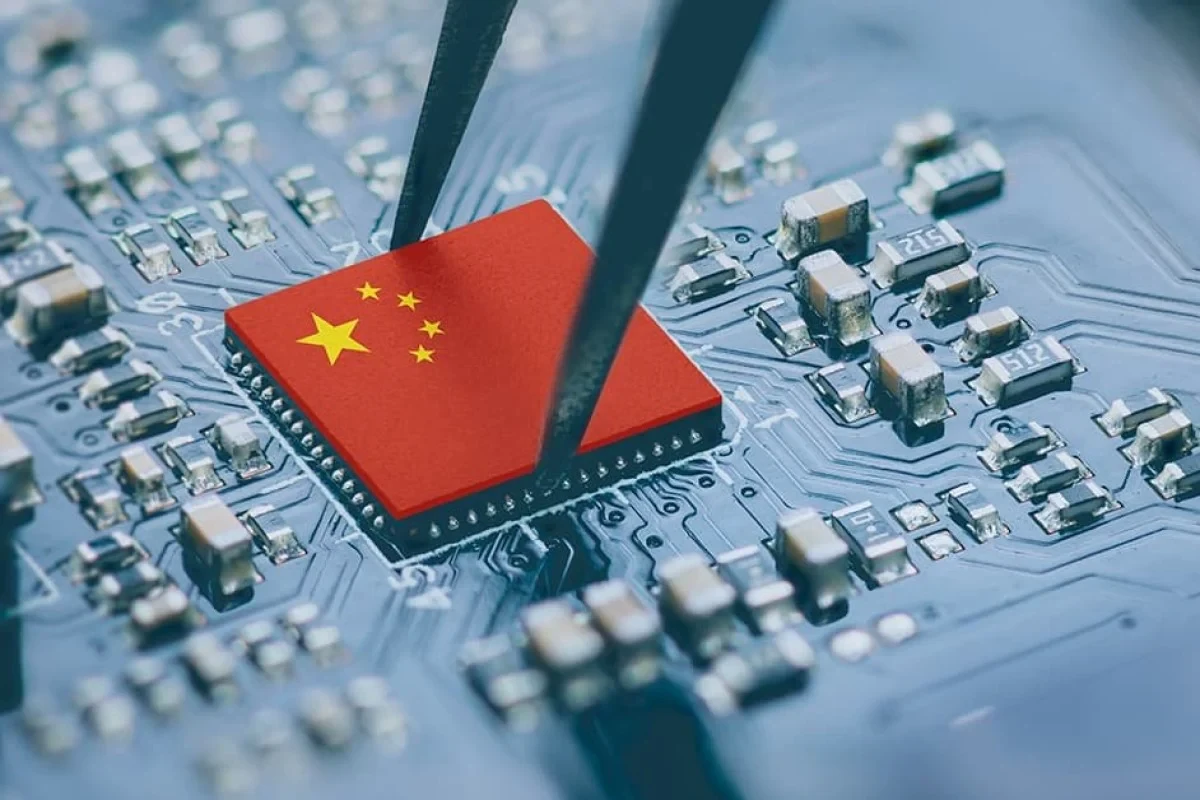
China is pushing hard in the chip race with the United States, and one of its richest provinces is stepping up with a bold plan. Zhejiang—home to Alibaba, the robotics company Unitree, and a ton of other tech players—has rolled out a five-year roadmap that targets major advances in chip design and wafer fabrication at the 3- to 7-nanometer level by 2030. The focus is on low-power, high-performance chips built for general-purpose computing and especially artificial intelligence, along with deeper work on the open-source RISC-V architecture (the fifth-generation push is explicitly mentioned).
The plan, which first surfaced through state media reports, feels like a straight response to the tightening U.S. export controls. For years now, Washington has been closing off access to the most advanced tools: no more cutting-edge Nvidia GPUs for Chinese customers, severe limits on lithography equipment from ASML and others, the whole “small yard, high fence” strategy meant to slow Beijing’s tech climb. Instead of backing down, local governments and companies are doubling down on self-reliance, and Zhejiang wants to lead the charge in one of the most critical areas.
Why 3–7nm specifically? That’s the performance sweet spot right now. A 7nm process can cram roughly 90–100 million transistors per square millimeter; drop to 3nm and you’re looking at 200–224 million. Those densities are what power the massive AI models everyone is racing to build and run efficiently. Just look at TSMC’s latest numbers: in the final quarter of 2025, nodes at 7nm and below (3nm, 5nm, 7nm) made up about 77% of their wafer revenue. That tells you how central these process nodes are to the entire global tech economy.
Zhejiang isn’t starting from zero. Alibaba already designs its own server chips and pours huge resources into cloud infrastructure and AI. Unitree demonstrates what clever hardware can do in robotics. Now the province is putting official weight behind more design houses, foundry capacity, and supply-chain pieces that can operate without depending on restricted Western technology.
This fits the bigger national picture. “Made in China 2025” was the early slogan, but the push has only gotten more intense. Xi Jinping and other leaders have repeatedly talked about breakthroughs in AI and semiconductors as top priorities for 2025 and beyond. Other hotspots—Shenzhen, Shanghai, Beijing—are rolling out similar aggressive targets. Everywhere you look, there are plans for more domestic production, better RISC-V implementations (the royalty-free alternative to ARM and x86), and creative workarounds for sanctions.
Sure, China still trails the absolute bleeding edge. SMIC can produce 7nm chips, but not yet at the yields, power efficiency, or scale that TSMC or Samsung deliver. The external pressure, though, acts like rocket fuel. Huawei’s Ascend line, DeepSeek running huge models without Nvidia hardware, new companies experimenting with chiplets and hybrid designs—all of it is accelerating progress faster than many outsiders expected.
For the rest of the world, the implication is clear: reliance on a handful of suppliers is becoming more fragile. If Zhejiang (and China broadly) manages to scale real, competitive 3–7nm production, it doesn’t just reshape the AI hardware landscape—it starts shifting who sets prices, standards, and availability in the long run. The U.S. is betting on containment; China is betting on endurance, scale, and state-backed mobilization.
One thing is already obvious: the old status quo in semiconductors is gone for good. Provinces like Zhejiang are right in the middle of building whatever comes next.
Talk to us, we’ll help you succeed in China.